Bills Garden: Recycling and Sustainability Commitment
 Bills Garden is committed to an ambitious recycling and sustainability programme that supports local communities and reduces waste sent to landfill. Our vision for recycling and sustainability at Bills Garden combines practical on-the-ground activity with long-term planning. We work with borough-level partners to align our approach with local waste separation schemes, including separate collections for food waste, garden waste, glass and mixed dry recycling, so our efforts contribute to council targets and neighbourhood expectations.
Our site-level strategy emphasises circularity: reduce, reuse and recycle in everything from plant pots and composting to event waste. We track material flows and report progress quarterly, using clear signage and education at the point of disposal to increase capture rates of recyclable materials. By embedding sustainable handling of organic and recyclable matter, Bills Garden aims to demonstrate how a community green space can be a leader in green recycling and environmental stewardship.
![A man with short dark hair, smiling, wearing a grey shirt, blue jeans, and a brown gardening apron, is kneeling in a well-maintained garden with lush green grass and a variety of plants. He is holding a small gardening rake in his right hand and appears to be tending to the soil near flowering plants, possibly preparing the bed or removing weeds. The garden features a mix of leafy shrubs, flowering plants with yellow and white blossoms, and a paved pathway with a gravel border. In the background, a wooden fence and step-like garden features are visible, suggesting a neat, landscaped outdoor space typical of residential gardens within the postcode area near [TOWN]. The scene is outdoors on a bright day with natural sunlight, emphasizing the natural tones of soil, foliage, and flowering plants, aligning with sustainable gardening practices promoted by Bills Garden in the local area.](/pub/_photos/gardening/f1996980224.jpg) We have set a clear recycling percentage target: a 70% recycling rate by 2030 across all operational waste streams associated with Bills Garden. This target covers compostable garden waste, segregated food waste from events, and dry recyclables such as paper, card, plastic containers and metal cans. Achieving that goal means improving separation at source, increasing reuse programmes and diverting more material to composting and anaerobic digestion rather than landfill or incineration.
We have set a clear recycling percentage target: a 70% recycling rate by 2030 across all operational waste streams associated with Bills Garden. This target covers compostable garden waste, segregated food waste from events, and dry recyclables such as paper, card, plastic containers and metal cans. Achieving that goal means improving separation at source, increasing reuse programmes and diverting more material to composting and anaerobic digestion rather than landfill or incineration.
Local Transfer Stations and Waste Handling
We regularly use nearby transfer facilities to ensure sorted materials are processed efficiently. Our operational partners transport separated loads to authorised local transfer stations to keep haulage distances short and emissions down. This local-first approach supports the boroughs' integrated waste management plans and allows us to prioritise processing routes that maximise recycling and energy recovery.
![A woman with long brown hair, dressed in a plaid shirt, blue jeans, and green gardening gloves, is crouched down in a garden to tend to flower beds. She is carefully pruning or planting yellow and purple flowering plants that are arranged along a landscaped pathway. The garden features well-maintained flower borders with a variety of colorful blooms, set on dark soil or mulch. To the left, there are potted plants ready for planting or potting. In the background, a modern greenhouse structure with large glass panels, supported by metal frames, is visible, along with a white van parked outside. The scene is outdoors on a partly cloudy day, with natural light highlighting the vibrant flower colours and lush green foliage. This setting demonstrates professional gardening work focused on maintaining and enhancing outdoor spaces, which relevantly aligns with landscaping and garden maintenance services in the [TOWN] area near [POSTCODE], provided by Bills Garden.](/pub/_photos/gardening/f1321713664.jpg) Key local transfer points we work with include:
Key local transfer points we work with include:
- Northside Transfer Station ??? receives segregated dry recyclables and glass;
- Riverside Organic Transfer Facility ??? dedicated to garden and food waste for composting;
- East Borough Transfer Yard ??? consolidates materials bound for local recycling plants and facilities.
These transfer station partnerships make it easier for Bills Garden to follow borough guidance on waste separation. Many surrounding councils operate dual-stream or multi-stream separation systems; our site adapts to those schemes so volunteers and visitors can sort waste in ways that match kerbside collections and minimise contamination.
Partnerships with Charities and Community Reuse
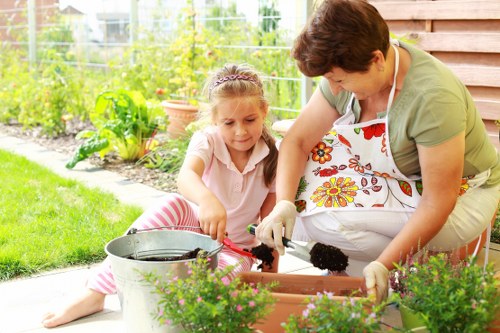 A vital part of our sustainability model is reuse through charity partnerships. Rather than discarding usable items, Bills Garden coordinates with local charities and social enterprises to extend the life of garden equipment, furniture and surplus plants. Reuse blocks demand for new products and supports social good across the neighbourhood.
Our charity and reuse partners include community repair caf??s, tool libraries and not-for-profit organisations that accept donated garden tools, seed packets and decorative planters. By establishing scheduled collection points and donation drives, we keep functional goods in circulation and reduce the volume of materials entering conventional waste streams. This approach also feeds into educational programmes that teach mending and upcycling.
![A man with short dark hair, wearing a red and white checkered shirt and gardening gloves, is pruning and tending to a flowering rose bush in a landscaped backyard garden. The garden features a neatly maintained lawn, a paved patio area with a lounge chair, and mature trees and hedges providing a lush green backdrop. In the background, there is a swimming pool with a light blue finish, partially surrounded by a stone border, and a garden shed or small outbuilding. The scene is set on a bright, clear day with natural sunlight highlighting the vibrant pink and red flowers on the rose bush, as well as the greenery and textured surfaces of the garden's various elements. This outdoor space demonstrates professional garden maintenance and landscaping that a service like Bills Garden might provide, emphasizing careful plant pruning, garden management, and sustainable outdoor practices in a typical UK setting near [POSTCODE] and [TOWN].](/pub/_photos/gardening/f1309900800.jpg) Operational sustainability at Bills Garden also addresses transport emissions. We are transitioning our delivery and collection fleet to low-carbon vans, combining electric vehicles for short local trips and modern hybrid units for longer routes. Our fleet strategy reduces tailpipe emissions, lowers noise pollution and demonstrates a practical route to decarbonising garden logistics while maintaining reliable service to transfer stations and charity partners.
Operational sustainability at Bills Garden also addresses transport emissions. We are transitioning our delivery and collection fleet to low-carbon vans, combining electric vehicles for short local trips and modern hybrid units for longer routes. Our fleet strategy reduces tailpipe emissions, lowers noise pollution and demonstrates a practical route to decarbonising garden logistics while maintaining reliable service to transfer stations and charity partners.
To support our 70% target we also prioritise on-site composting, which transforms garden waste into rich soil amendment for use around Bills Garden beds. This closed-loop soil management reduces the need for external inputs and clearly reflects our commitment to sustainable horticulture. Compost bays and secure composting protocols minimise odour and vector issues while maximising organic matter recovery.
We run regular volunteer training focused on proper segregation, contamination avoidance and best practice for packing recyclables. Volunteers and staff receive guidance tailored to the local boroughs' waste separation formats ??? whether that means co-mingled containers or dual-stream sorting ??? so Bills Garden operates in harmony with municipal systems. Clear, consistent labelling and on-site colour coding make it simple for everyone to participate.
Measuring impact is central to our sustainability reporting. We track tonnes diverted from landfill, greenhouse gas reductions from our low-carbon vans, and the number of items redirected to charities. By publishing annual summaries of progress (without personal or contact details), Bills Garden remains accountable and transparent about achievements and the next steps needed to meet our recycling and sustainability objectives.
Looking ahead, Bills Garden plans to pilot additional innovations such as pay-as-you-throw composting credits for community contributors, expanded on-site water capture to reduce irrigation needs, and trials of fully electric larger vehicles as charging infrastructure improves. All of these moves are designed to complement our core recycling and sustainability mission and to keep the garden a model of community-led environmental action.
Ultimately, Bills Garden's recycling program is about creating a resilient, circular-local ecosystem: one where garden waste becomes compost, reusable goods find new homes through charity partners, and low-emission transport links materials to nearby transfer stations. By staying aligned with borough guidelines and setting an ambitious recycling percentage target, Bills Garden is turning everyday activity into measurable climate and community benefits.
Join us in building a greener future ??? by sorting your waste, supporting reuse, and celebrating the progress of local recycling & sustainability initiatives, together we can reach our targets and keep Bills Garden thriving for generations to come.